Two Eagle County nonprofits land $1.65 million in new Catalyst grants
The Katz Amsterdam Foundation launched its Catalyst Grant Program on Oct. 20 with $4.5 million for seven mountain town organizations. The Eagle County share goes to food access in Gypsum and Edwards and to mentoring for first generation students.
Two Eagle County nonprofits are in the first class of a new grant program built for mountain towns. The Katz Amsterdam Charitable Trust announced the Catalyst Grant Program on Oct. 20, with seven organizations in Eagle County, Summit County and Park City sharing an initial $4.5 million, paid as grants spread over three years. The Eagle County recipients are the Eagle Valley Community Foundation, at $900,000, and My Future Pathways, at $750,000.
The foundation said it created Catalyst for organizations that formed in response to changing community needs, at the point where steady support can help them fill gaps, strengthen operations and reach more people. The program works in four areas the foundation identified as pressure points for mountain town families: early childhood education, food security, immigrant services and out of school opportunities for students in kindergarten through 12th grade. Additional grants to different organizations in the same areas are planned each year.
When a young organization gets steady support at the right moment, the whole community benefits. These programs are lifelines for families facing real barriers, and we want them to be here for years to come.
Rob Katz, co-founder of the Katz Amsterdam Foundation, in the foundation announcement, Oct. 20, 2026
Food access gets the largest Eagle County grant
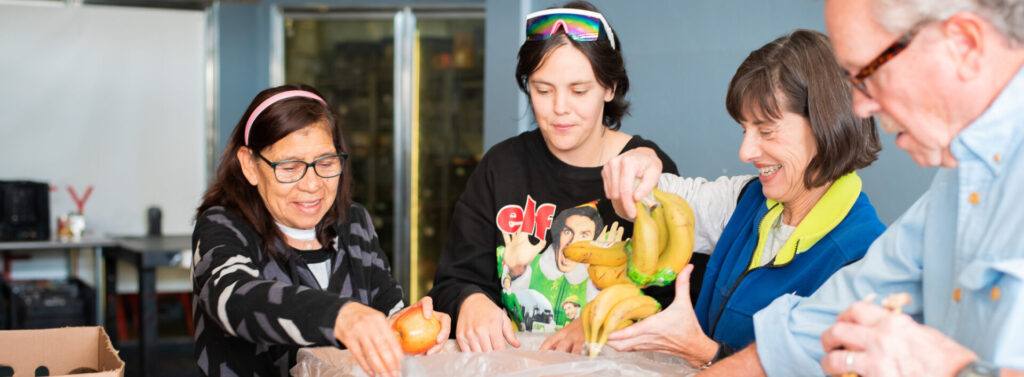
The Eagle Valley Community Foundation is the organization behind The Community Market. Between its storefront locations, its mobile market stops and 22 outreach programs, the market reaches as many as 6,000 people in a week, according to the announcement. The foundation's own program page puts the figure at more than 6,000 people weekly and describes storefronts in Edwards and Gypsum, the Gypsum site doubling as the central warehouse. The grant money is earmarked for tying that food network more closely to the places children already spend their days: schools, early learning programs and youth sites.
My Future Pathways began in 2019. It works with young people who need support, concentrating on Latino students who would be the first in their families to reach higher education, and it mixes mentoring with help on schoolwork and wellbeing. Enrollment has reached roughly 2,250 students a year, about 37 percent of the school district, the announcement said. The organization's own site states its mission as empowering young Latino community members and their families toward graduation, employability and leadership. The announcement said the flexible support will keep the focus on what students need most.
Operating money, not project money
Most of the Catalyst money is general operating support, the announcement said, which leaves recipient leaders free to put it toward hiring key staff, building infrastructure or expanding programming. A third grant touches Eagle County from next door: Mountain Dreamers, a Frisco based immigrant advocacy organization, receives $450,000 to sustain its work in Summit County and expand services in Eagle County, where it also supports immigrant and mixed status families. The remaining recipients are PC Tots ($900,000) and the Wasatch Immigration Project ($600,000) in Park City, and CAFE Food Rescue ($450,000) and Smart Bellies ($450,000) in Summit County.
The launch adds to a longer record the foundation cites for itself: more than $86 million in philanthropic contributions since 2008, including more than $34 million to mountain resort communities, according to the announcement. The foundation said it plans to expand Catalyst in the years ahead, extending the same kind of long term support to more organizations working in mountain communities. For Eagle County, the first round lands where need is most visible: a food market network that counts its users in the thousands each week, and a mentoring program that now reaches more than a third of the school district's students, on the foundation's figures.